

MENAFem Reflection on the 2026 IMF & World Bank Spring Meetings
These so-called “technical” failures are, in fact, gendered political choices. In the MENA region—where war, debt, and climate collapse intersect with patriarchal state structures—the “silence” of the Spring Meetings is a direct assault on the lives of women and marginalized communities.
Beyond Survival: A MENAFem Reflection on the 2026 IMF & World Bank Spring Meetings
The 2026 Spring Meetings concluded with a polished silence. There were no disruptions, no structural shifts, and no recognition that the global financial architecture is beyond its breaking point, and has in fact continuously failed to take on decades of recommendations from civil society and the communities they represent, leaving the Global South once again in an even bigger debt crisis than those seen in the 1980s and 1990s.
For the MENAFem Movement network, the takeaway is clear: The system is not failing; it is working exactly as designed. It is a system that prioritizes creditor returns over the care economy, and geopolitical energy security over the survival of the Global South.
The Violence of “Normalcy” in a Region at War
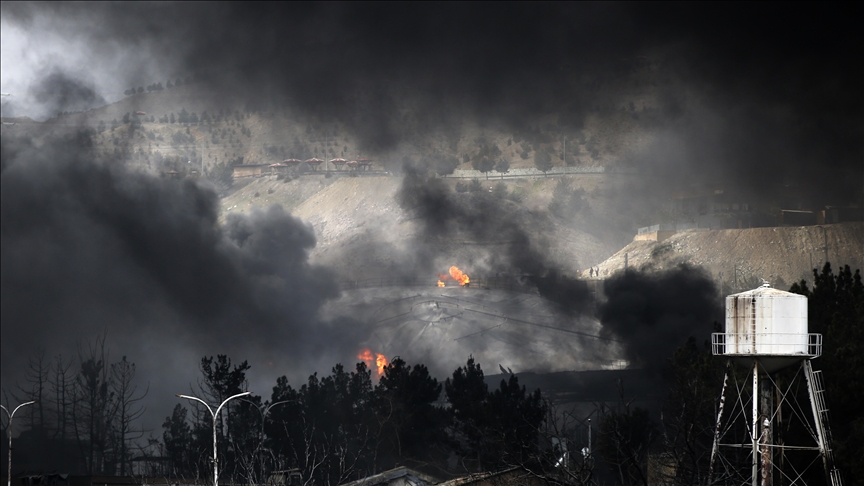
The institutions treated these meetings as a standard policy cycle. But for the MENA region, there is no “normal.” While the conflict in Ukraine triggered systemic responses, the wars reshaping the MENA region are treated as “local instabilities.” In reality, these conflicts are being used to justify a return to extractive fossil fuel models, sacrificing climate commitments at the altar of “energy security.” When the IMF ignores the economic rupture caused by regional war, it ignores the women who pick up the pieces of collapsed public services. We are seeing a reversal of progress, where “security” is funded by cutting social protection.
The Debt-Austerity Trap: A Feminist Crisis
The logic remains unchanged: **Borrow to survive, cut to repay.** As MenaFem and its partners highlighted, new financing still comes tied to fiscal consolidation (austerity). When a state cuts public spending to service debt, it is not a neutral mathematical adjustment. It is a transfer of labor onto women. The IMF is essentially balancing its books on the unpaid and underpaid labor of women in the Global South.
Prioritizing inflation control over employment and social care is a political choice that protects wealth and punishes the vulnerable. We do not need “resilience” within a broken system; we need the redistribution of power.
The Climate-Debt Contradiction
The V20 made it undeniable: The problem isn’t a lack of ambition; it’s the lack of fiscal space. We are told to transition to green energy while being choked by debt. The move from “Climate Finance” to “Energy Politics” means that fossil fuels are being repositioned as “necessary,” while climate grants are being replaced by more loans.
We must move from private leverage to (public investment). Climate action cannot be another tool for debt dependency. It must be rooted in grants and the recognition of ecological debt owed to the Global South.
A New Opening: The Borrowers’ Platform
The launch of the (Borrowers’ Platform) is a significant political crack in the wall. For decades, creditors have acted as a cartel (the Paris Club, the IMF Board), while borrowers were forced to negotiate in isolation. This platform offers a space to coordinate, but we must be wary.
If this platform only facilitates “technical exchanges,” it will be absorbed by the system. It must become a site of collective resistance ,a place where the Global South refuses regressive conditionalities and demands a seat at the head of the table, not just a chance to respond to pre-made decisions.
The V20 Lifeline: A Band-Aid, Not a Cure
While the V20’s “Lifeline” mechanism provides essential liquidity for climate-vulnerable nations, we must call it what it is: a survival strategy. A lifeline keeps you from drowning, but it doesn’t take you out of the water. If the underlying structure continues to produce debt, emergency liquidity becomes a permanent state of dependence.
Our Path Forward: From Participation to Power
The 2026 Spring Meetings proved that incremental reform is a dead end. It only serves to stabilize a system that produces harm. From a MENAFem perspective, we advocate for three structural shifts:
- De-Financialize the Future: Move beyond debt management toward a total restructuring of the global financial architecture. Debt is a tool of control; canceling it is a prerequisite for feminist development.
- Public Wealth, Not Private Profit: Demand wealth taxation and the end of regressive taxes that burden the poor. We cannot talk about “resilience” while wealth remains protected from the tax man.
- Sovereignty Over Policy: Borrowing countries must move from “participating” in IMF programs to having the power to dictate their own development paths—ones that prioritize the care economy and ecological sanity over debt servicing.
The Final Question
How long can a system maintain its legitimacy when it offers nothing but “management” in the face of collapse?
The Spring Meetings didn’t provide answers because they are afraid of the truth: The Global South is no longer looking for a seat at their table. We are building our own.
The moment for collective action is not coming. It is already here.