Bonn at a Crossroads: Finance Battles, Just Transition Decisions, and the Politics of Climate Action
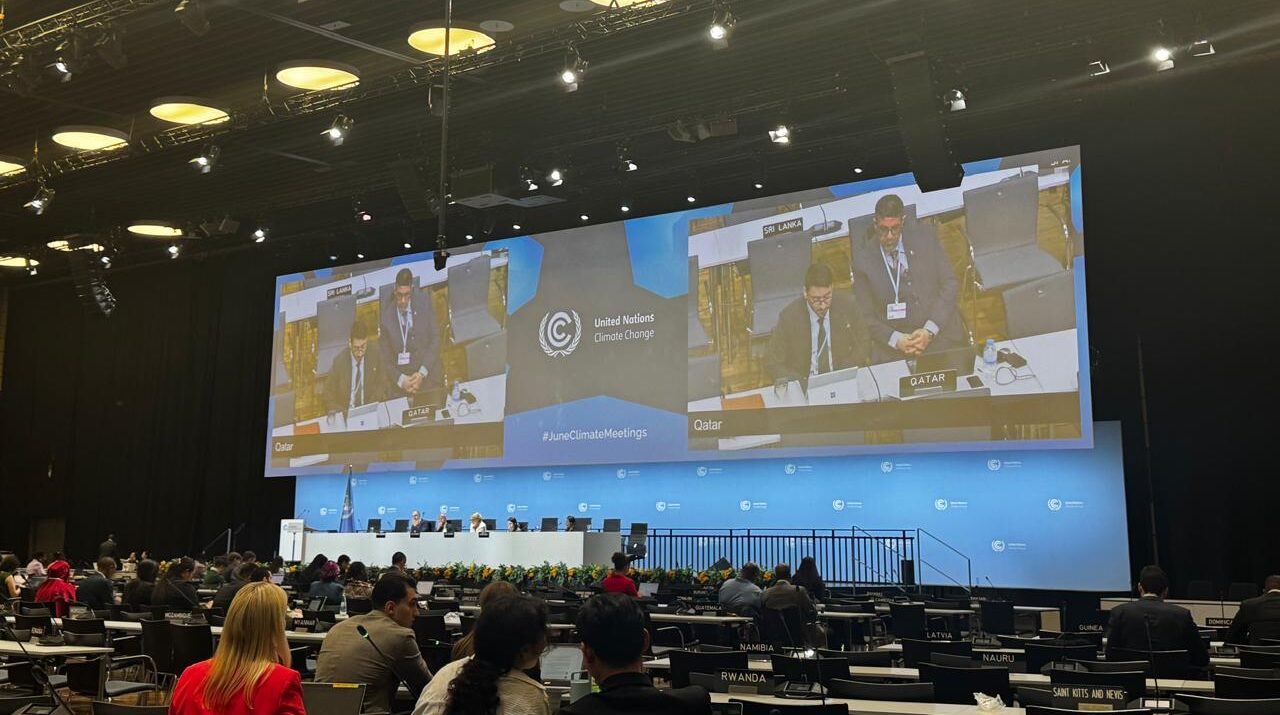
As negotiators gather in Bonn for the 64th sessions of the UN Climate Change Subsidiary Bodies (SB64), the world arrives carrying more than rising temperatures. Wars continue to devastate communities and ecosystems. Debt burdens are suffocating public budgets across the Global South. Fossil fuel expansion shows no signs of slowing down. Meanwhile, the promises of climate finance remain far from the scale and urgency required to respond to the crisis.
SB64 is often described as a “technical” meeting. In reality, it is where many of the political battles that will shape COP31 begin to take form.
Over the next two weeks, negotiators will work through a crowded agenda covering climate finance, adaptation, just transition, mitigation, transparency, and implementation. Yet beneath the procedural language lies a much bigger question:
Who will pay for climate action, who will shape the transition, and whose futures are being negotiated?
For countries across the MENA region and the wider Global South, climate action is increasingly constrained by a global economic system built on debt, austerity, extraction, and unequal power relations. As climate impacts intensify, governments are being asked to do more with less, while public resources continue to flow toward debt servicing, military spending, and fossil fuel industries rather than adaptation, care systems, and community resilience.
This tension is likely to define many of the conversations in Bonn.
Finance: The Biggest Political Battle
Climate finance is expected to dominate discussions throughout SB64.
Following the agreement on the New Collective Quantified Goal (NCQG) and the political commitments made in recent years, negotiators now face the difficult task of turning numbers into reality.
At the center of the debate is the Baku-to-Belém Roadmap and the broader question of how to mobilize the USD 1.3 trillion annually that developing countries say is needed to respond to the climate crisis.
Yet the real disagreement is not only about quantity.
It is about the quality of finance.
Will support come as grants or loans? Will climate finance create new debt burdens? Will adaptation receive adequate support? Will the international financial architecture itself be reformed, or will countries simply be encouraged to attract more private investment?
These questions are expected to shape discussions across multiple agenda items and will likely remain contentious until COP31.
The Rise of Article 2.1(c)
One of the newer and potentially transformative discussions is the launch of the Veredas Dialogue on Article 2.1(c) of the Paris Agreement.
At its core, the dialogue asks how global financial flows can be aligned with climate goals.
Supporters argue that climate goals cannot be achieved without transforming the broader financial system. Critics, particularly from developing countries and civil society, warn that discussions on financial alignment must not become a substitute for developed countries’ obligations to provide public climate finance.
For climate justice advocates, the Veredas Dialogue presents both an opportunity and a risk. It could open space to discuss debt, fossil fuel finance, development bank reform, and structural inequalities. Or it could become another avenue for shifting responsibility away from historical emitters.
How negotiators navigate this balance will likely shape climate finance debates well beyond Bonn.
A Defining Moment for Just Transition
One of the most politically significant discussions at SB64 concerns the future of the Just Transition Work Programme.
Established as a platform to advance discussions on pathways toward fair and equitable transitions, the programme is now approaching a critical juncture. Parties are increasingly confronted with a question that could shape the future of just transition under the UNFCCC: should the work programme simply be renewed, or is it time to establish a more permanent institutional mechanism?
The answer matters.
A renewed work programme could keep just transition within the realm of dialogue and knowledge exchange. A dedicated mechanism, on the other hand, could create stronger foundations for implementation, support, accountability, and international cooperation.
Whether Parties are ready to move from conversations to institutional arrangements is a question that may begin to be answered over the coming days.
The Missing Conversation on Loss and Damage
Notably absent from the SB64 agenda this year is a substantial space for discussions on Loss and Damage.
At a time when climate-related losses are escalating across regions, the limited attention given to the issue raises important questions about political priorities. While implementation of the Fund for Responding to Loss and Damage continues through other channels, the absence of dedicated negotiations at SB64 reflects a broader challenge that has characterized climate politics for years: recognition of losses has advanced faster than commitments to address them.
For many vulnerable communities, this absence is difficult to ignore.
The lack of political attention also risks reinforcing one of the central concerns surrounding Loss and Damage since its inception: without sustained political momentum, funding commitments remain uncertain, implementation remains slow, and the people already facing irreversible impacts continue to wait.
What MENAFem Will Be Watching
Over the next two weeks, MENAFem will follow the negotiations through a feminist climate justice lens.
We will be asking:
- Are climate solutions addressing the structural drivers of inequality?
- Are women and marginalized communities being centered or sidelined?
- Are financial commitments increasing public resources or deepening debt?
- Is just transition evolving into a framework capable of delivering support and accountability?
- What does the absence of Loss and Damage from the agenda tell us about the priorities of the international climate regime?
Because climate negotiations are never only about emissions.
They are also about power, resources, and whose lives are considered worth protecting.
As SB64 begins, the road to COP31 remains uncertain. What happens in Bonn may not generate the biggest headlines, but it will shape the political terrain on which the next climate summit is fought.
And for communities across the MENA region and the wider Global South, the stakes could not be higher.