SB64 Ends With More Questions Than Answers
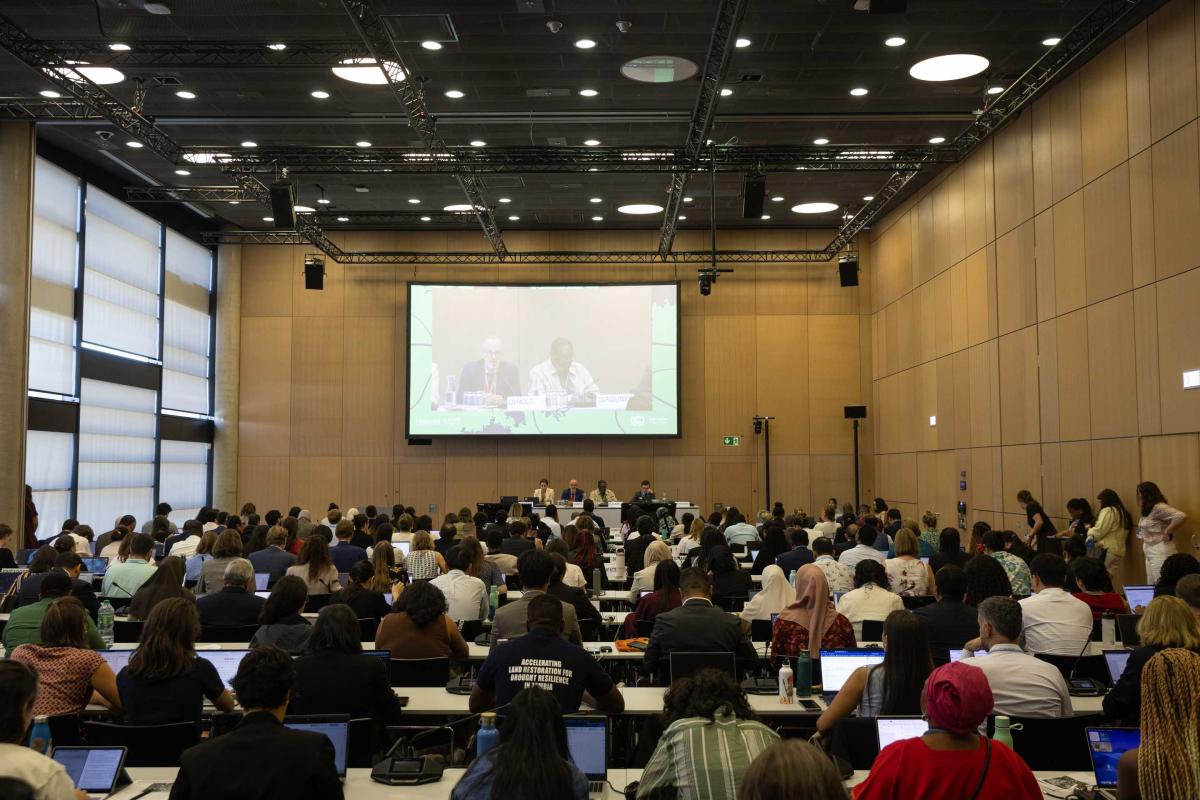
 The Bonn Climate Meetings were meant to move the world from promises to implementation. Instead, SB64 exposed a familiar reality: countries are being asked to deliver climate action, adaptation, and transitions while the finance, political will, and justice needed to make them happen remain absent.
Across climate finance, adaptation, just transition, fossil fuel transition, and gender-responsive climate action, the same question echoed through the negotiation rooms:
Who pays, who decides, and who bears the cost?
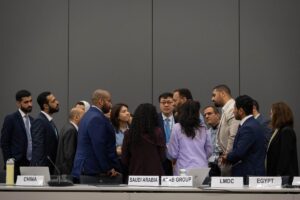
While Bonn was never expected to deliver final decisions, it was meant to prepare the ground for COP31 in Antalya. Instead, many of the most contentious issues remain unresolved, setting the stage for difficult political negotiations later this year.
Climate Finance: Still the Missing Foundation
Perhaps the clearest message from SB64 was that climate finance remains the biggest obstacle to progress.
Nearly every agenda item—from adaptation to just transition—eventually returned to the question of finance. Developing countries continued to stress that climate action cannot happen without public, grant-based, predictable funding, while many developed countries focused on mobilizing private investment, reforming multilateral development banks, and improving “enabling environments.”
The divide is not new, but it became increasingly visible throughout the two weeks. For many Global South countries already struggling with debt, austerity measures, and shrinking fiscal space, the continued emphasis on loans and private finance raises concerns that climate action is becoming another source of financial burden rather than support.
For many negotiators and observers, the debate is no longer about climate ambition. It is about whether countries will receive the means to implement it.
Adaptation: The Fault Line of SB64
If there was one issue that exposed the deep divisions between developed and developing countries in Bonn, it was adaptation.
The Global Goal on Adaptation (GGA) was expected to help move adaptation from broad political commitments to concrete implementation. Instead, negotiations once again became trapped between technical discussions and unresolved political questions around finance and support.
Throughout SB64, negotiators spent long hours debating indicators, methodologies, and reporting frameworks. However, many developing countries repeatedly stressed that adaptation cannot be separated from the means of implementation. The core question remained unanswered:
How can countries be expected to achieve adaptation goals without the finance needed to implement them?
As discussions progressed, tensions grew around references to adaptation finance, accountability, and the responsibilities of developed countries. Many developing countries warned against creating systems that measure adaptation performance while failing to provide the resources necessary to achieve it. Meanwhile, resistance continued against language that could strengthen expectations around financial support.
The deadlock became so significant that parts of the adaptation negotiations were eventually transferred to Rule 16 of the UNFCCC Rules of Procedure. While procedural on paper, the political implications are substantial. Rule 16 effectively means that Parties could not reach agreement and discussions are postponed to the next session.
For communities already facing droughts, floods, water scarcity, food insecurity, displacement, and worsening climate impacts, adaptation cannot simply be postponed. Yet once again, some of the most urgent questions around support and implementation were left unresolved.
Another contentious debate emerged around the future governance of the Adaptation Fund. What appeared to be a technical discussion about seats on the Adaptation Fund Board quickly revealed deeper disagreements around responsibility, contributor obligations, and representation under the Paris Agreement. Unable to reach consensus, Parties ultimately agreed to defer the issue to COP31.
For many observers, these disagreements reflected a broader trend visible throughout Bonn: adaptation continues to be treated as a technical issue, while the political and financial decisions required to make adaptation possible remain unresolved.
For countries across Africa, the Middle East, Small Island States, and other climate-vulnerable regions, adaptation is not a future challenge. It is a present reality affecting food systems, water resources, public health, livelihoods, care work, and community survival.
The risk heading into COP31 is that adaptation becomes a framework for measuring vulnerability rather than reducing it.
Just Transition: Progress Delayed
Just Transition entered SB64 carrying high expectations but left with many unanswered questions.
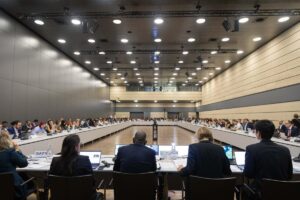
Negotiators continued debating the future of the Just Transition Work Programme and whether it should evolve into a more permanent mechanism capable of supporting implementation. The draft Terms of Reference presented by the Chairs remain under discussion, with key issues still unresolved.
One of the major concerns raised throughout the negotiations was the limited progress on ensuring an intersectional approach. Without clear recognition of the different realities faced by women, informal workers, migrants, Indigenous Peoples, rural communities, and other marginalized groups, many fear that just transition risks becoming a narrow technical discussion rather than a transformative process.
Several moments in the negotiations reflected a broader political divide, with some countries seeking to keep the process focused on dialogue and exchange, while others pushed for a more operational mechanism with real support and implementation pathways.
As a result, Bonn ended without clarity on whether COP31 will be asked to renew the programme, establish a mechanism, or attempt to do both.
For the Global South, this delay matters. Many countries are already navigating energy transitions, industrial restructuring, climate impacts, and growing economic pressures. Without a clear mechanism, dedicated support, and a strong intersectional lens, the risk is that the burdens of transition will continue to fall on workers, women, informal economies, and communities already facing multiple forms of inequality.
Fossil Fuel Transition: Old Divides Remain
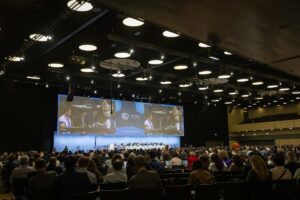
The transition away from fossil fuels remained a sensitive issue.
While many countries and civil society groups continue pushing for clear implementation pathways following previous commitments to transition away from fossil fuels, resistance from fossil fuel-producing interests remains strong.
Discussions around energy transition often revealed a deeper tension: many developing countries acknowledge the urgency of climate action but continue to ask how transitions can happen while development needs, energy access concerns, debt burdens, and economic dependence on extraction remain unaddressed.
For many countries in the Global South, the challenge is not choosing between development and climate action. It is being expected to achieve both without adequate support.
Loss and Damage: Present Everywhere, Yet Nowhere
Although Loss and Damage did not have a standalone agenda item, it remained present across multiple discussions on finance, adaptation, and implementation.
This absence was not lost on vulnerable countries and communities. As climate impacts intensify, many continue to question why one of the most urgent realities facing frontline communities remains politically sidelined.
The gap between existing commitments and actual needs remains enormous, and the issue is likely to return to COP31 with increased political pressure.
What Does This Mean for COP31?
Rather than resolving tensions, SB64 largely postponed them.
COP31 will now inherit some of the most politically difficult questions left unanswered in Bonn:
- Will climate finance move beyond promises and become accessible, public, and grant-based?
- Will adaptation discussions be matched by real resources?
- Will Just Transition evolve into a meaningful implementation mechanism?
- Will intersectionality be embedded in climate action rather than treated as an afterthought?
- Will countries finally address Loss and Damage with the urgency it requires?
- And perhaps most importantly, will Global South countries receive the support needed to implement the commitments they are repeatedly being asked to make?
If Bonn revealed anything, it is that climate ambition and climate implementation remain separated by a widening finance gap.
For MenaFem, the lesson remains clear: there can be no just transition without climate finance, no climate finance without debt justice, and no climate justice without an intersectional, feminist, and rights-based approach that places communities—not markets—at the center of the transition.