

COP31: A Just Transition Cannot Be Built on Unjust Finance
From Belém to Antalya, a year of climate diplomacy has produced new proposals, roadmaps and financial discussions. But will COP31 confront the economic inequalities standing in the way of climate justice?
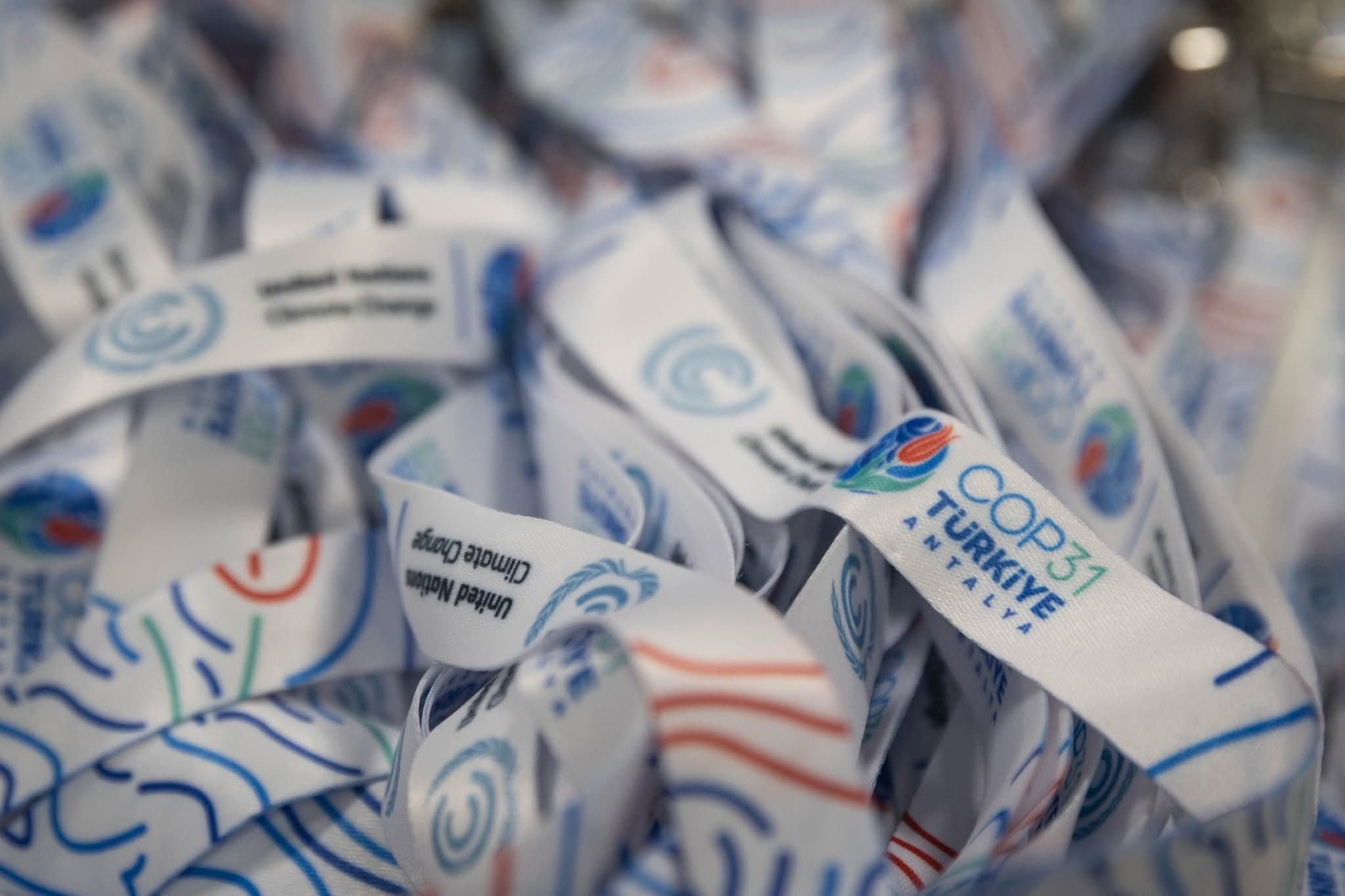
As governments prepare to gather in Antalya, Türkiye, for COP31 from 9 to 20 November 2026, the international climate process finds itself at a familiar crossroads. Another year of negotiations, dialogues and high-level meetings has produced new frameworks and political commitments, while the structural inequalities driving the climate crisis remain largely untouched.
For countries across the Middle East and North Africa (MENA) and the wider Global South, climate action continues to collide with sovereign debt, austerity, shrinking fiscal space, fossil fuel dependency and an international financial architecture that prioritises creditors and investors over people’s needs.
COP31 is being framed as an implementation COP. Yet the question remains: implementation for whom, financed by whom, and under whose terms?
For MENAFem, the negotiations on climate finance and the design of the Just Transition Mechanism will be central tests of whether governments are willing to confront these contradictions.
From Belém to Antalya: A Year of Dialogue, but How Much Progress?
COP30 in Belém delivered important political gains, particularly the agreement to develop a Just Transition Mechanism and the adoption of the Belém Gender Action Plan. Yet governments failed to agree on a clear roadmap for transitioning away from fossil fuels, while climate finance commitments remained disconnected from the scale and nature of developing countries’ needs.
The June negotiations in Bonn (SB64) exposed continuing divisions over finance, adaptation and just transition. Subsequent intersessional discussions, including the September Just Transition Dialogue in Baku and the informal workshop in Sydney, helped clarify the possible functions, governance and scope of the proposed mechanism.
But these discussions have not resolved the underlying political disagreements. Recognition of workers’ rights, gender equality, international cooperation and the need for implementation support has not yet translated into agreement on how these principles will shape the mechanism.
The challenge in Antalya is not to celebrate another institutional proposal, but to ensure that what governments eventually design can deliver justice in practice.
Climate Finance: More Money, More Debt, and the Same Unequal System?
Climate finance will again dominate the political discussions at COP31, following the inadequate USD 300 billion annual goal agreed at COP29 and the broader ambition to mobilise USD 1.3 trillion annually by 2035.
The Baku-to-Belém Roadmap and the Xingu Finance Talks, including discussions alongside the IMF–World Bank Annual Meetings in Bangkok, have increasingly focused on expanding fiscal space, reducing the cost of capital and aligning financial flows with climate objectives.
These discussions matter, but they also expose the limitations of the current approach.
Reducing borrowing costs is not the same as resolving debt distress. Mobilising private investment is not equivalent to providing public climate finance. And aligning financial flows under Article 2.1(c) cannot replace developed countries’ obligations under Article 9 of the Paris Agreement.
In Bangkok, the contradiction between climate ambition and the international financial architecture was particularly visible. While financial institutions promoted private capital mobilisation and investment-led development, civil society movements challenged the debt, austerity and extractive economic models that continue to undermine public services and climate resilience.
At COP31, multilateral development banks will present their climate finance reporting, private finance mobilisation approaches and transparency initiatives. But rising climate finance figures cannot be celebrated without examining what lies behind them.
How much is provided as grants rather than loans? How much reaches communities rather than financial intermediaries? How much creates additional public liabilities? And who ultimately carries the risks?
For women, these questions are not abstract. Debt servicing and austerity constrain public spending on healthcare, education, social protection and care infrastructure, shifting the burden of survival onto women’s unpaid labour.
Climate finance that deepens debt dependency and austerity cannot be called climate justice, regardless of how green the investment appears.
MENAFem will therefore scrutinise not only the volume of finance announced in Antalya, but its terms, accessibility, accountability and consequences for public budgets and communities.
The Just Transition Mechanism: Still Being Written, Still Being Contested
One of the most consequential discussions at COP31 will be the negotiation of the Just Transition Mechanism agreed in principle at COP30.
The mechanism is not yet an operational institution. Its design, functions, governance and relationship with existing UNFCCC processes remain under discussion.
This is precisely why Antalya matters.
The Women and Gender Constituency (WGC), alongside allied movements, has developed a proposal for a Belém–Antalya Mechanism built around three interconnected functions: strengthening coordination across climate institutions and negotiating tracks; facilitating knowledge, experience and technical exchange; and supporting practical action, capacity-building and access to implementation support.
Importantly, the proposal calls for meaningful participation by women, workers, Indigenous Peoples and affected communities, alongside attention to non-debt-creating finance.
These are not secondary design questions. They determine whether the mechanism will serve those most affected by the transition or reproduce the exclusionary governance structures already embedded in international climate finance.
A just transition cannot be confined to energy systems or employment policies. It must connect finance, adaptation, mitigation, technology, social protection, labour rights and care economies, while recognising countries’ different responsibilities and capacities.
For MENAFem, the objective at COP31 is not to rush the creation of another institution, but to secure a just, inclusive and implementable mechanism capable of working across negotiating tracks and supporting real transformation at national and community levels.
The risk is that governments settle for a weak coordination platform without sufficient authority, meaningful participation or pathways to support implementation.
The negotiations must resist reducing just transition to a technical exercise that leaves the structural causes of inequality untouched.
Transitioning Away from Fossil Fuels: Another Roadmap Without Accountability?
The fossil fuel transition will also be a critical test of political commitment.
Following the failure to agree on a formal fossil fuel transition roadmap in Belém, Brazil’s outgoing COP30 Presidency published a voluntary roadmap on 3 November, proposing pathways for countries to assess their readiness, strengthen international cooperation and accelerate the transition away from fossil fuels.
The roadmap acknowledges financial and structural barriers, including fossil fuel revenue dependency, investment needs and the cost of capital.
But a voluntary roadmap is not a substitute for negotiated obligations, public financing and accountability.
The discussions initiated in Santa Marta earlier this year demonstrated growing momentum for international cooperation on fossil fuel phaseout. Yet governments and financial institutions continue supporting new fossil fuel infrastructure, including gas expansion across Africa and the MENA region.
The contradiction is difficult to ignore: countries are being encouraged to transition away from fossil fuels while being offered financing arrangements and development models that reinforce extractive dependency.
Nor can the transition simply replace fossil fuel extraction with new forms of green extractivism driven by demand for critical minerals, cheap labour and land.
A transition that reproduces dispossession, debt and unequal control over resources is not a just transition.
What Will MENAFem Be Watching?
Throughout COP31, MENAFem will closely follow the negotiations on climate finance and the emerging design of the Just Transition Mechanism, while connecting these discussions to fossil fuel phaseout, adaptation and the Belém Gender Action Plan.
We will examine whether climate finance discussions strengthen public obligations or further shift responsibility towards private investors and indebted countries. We will scrutinise MDB financing figures against the realities of debt, austerity and unequal access to resources.
We will also monitor whether the Just Transition Mechanism being negotiated reflects feminist demands for meaningful participation, cross-cutting coherence and practical implementation support, rather than becoming another fragmented process within the UNFCCC.
After a year of dialogues in Bonn, Baku, Sydney and Bangkok, the challenge is no longer simply to recognise the need for change. It is to confront the political and economic interests preventing that change.
COP31 must not become another conference where governments agree on the language of justice while preserving the financial structures that make justice impossible.
For MENAFem, the message is clear: climate action must expand public resources, not deepen debt; strengthen collective rights, not concentrate power; and enable a just transition across sectors and communities, rather than merely producing another institution on paper.
A just transition cannot be built on unjust finance.